California DMV Behind-the-Wheel Test: Pre-Drive Checklist and Scoring (2026)
The California DMV behind-the-wheel test starts before you turn the key. The examiner runs through a 15-item pre-drive safety check on your vehicle. Fail any one of them and the test either gets cancelled or counts as unsatisfactory, which goes on your record the same as a fail. Knowing what's on that list: and why it matters: takes away a lot of the uncertainty on test day.
Table Of Contents
- 1. Pre-drive safety checklist: every item explained
- 2. How the scoring works during the drive
- 3. What gets marked during the drive
- 4. How to prepare before your test
- 5. What to bring on test day
- 6. If you fail the behind-the-wheel test
- 7. Choosing your DMV location strategically
- 8. What to do and avoid on test day
Pre-drive safety checklist: every item explained
Driver window
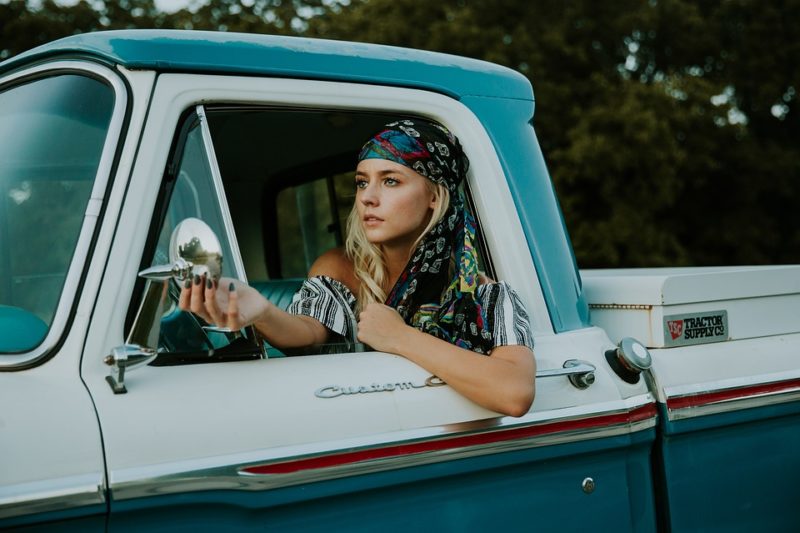
The driver's window must open. The examiner will ask you to open it at the start of the check. This allows them to hear outside traffic clearly and see your hand signals if needed.
Only 1% of California drivers answer all 3 correctly
Think you know the rules? Most licensed drivers miss at least one.
At 60 mph on a dry California freeway, what is the recommended minimum following distance?
Windshield
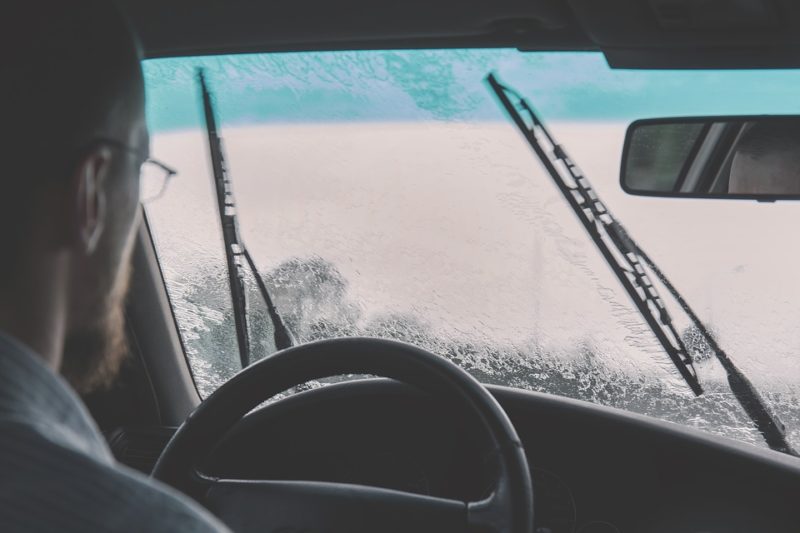
The windshield must give both you and the examiner an unobstructed view of the road. A crack running through the driver's line of sight cancels the test. Small chips near the edges are generally fine. Large cracks across the center are not. Check it in daylight before you drive to the DMV.
Preparing for your DMV test?
Download our free iOS app — 1,164+ practice questions in 11 languages, flashcards, and offline study!

Rearview mirrors
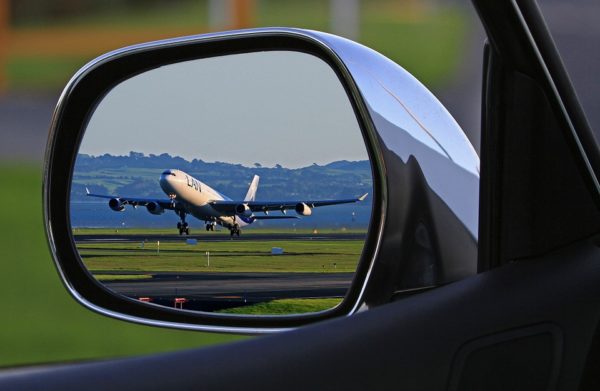
Your vehicle needs at least two working mirrors: one on the left outside (driver's side) and either a center interior mirror or a right outside (passenger's side) mirror. All mirrors must be adjustable and give a clear view to the rear. If the center mirror is missing or broken, the passenger-side mirror must be present and intact.
Turn signals
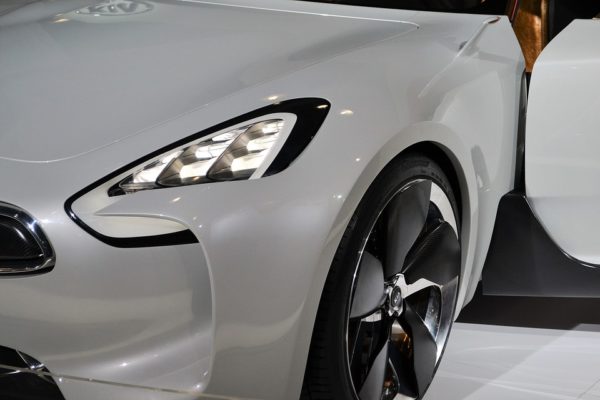
Front and rear turn signals on both sides must work. The examiner will ask you to activate them during the check. A single burned-out bulb is enough to cancel the test. Walk around the car the night before and check all four corners.
Brake lights

Both brake lights must be operational. This is one of the most common reasons tests get cancelled: a single burned-out bulb the driver didn't notice. Before you leave for the DMV, have someone stand behind the car while you press the brake pedal and confirm both lights come on.
Tires
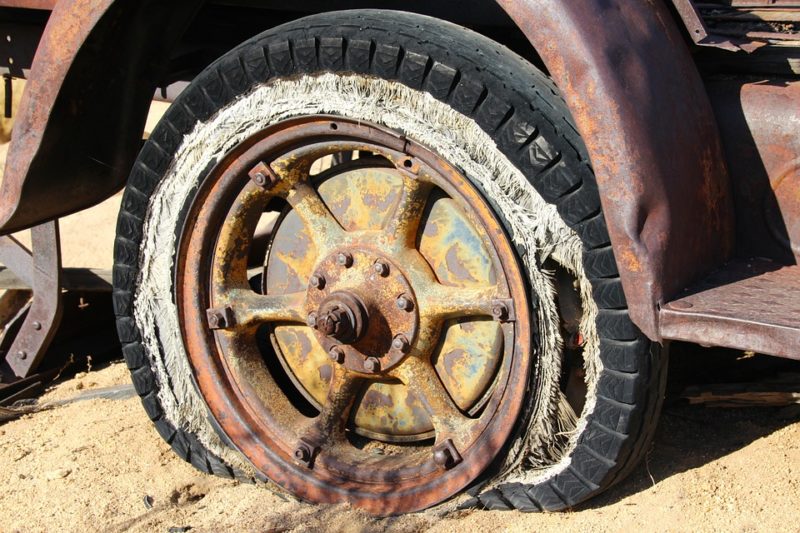
Each tire must have at least 1/32-inch tread depth across two adjacent major tread grooves. The simplest check: if the tread wear indicator bars are flush with the surrounding tread, the tire is too worn. Bald tires or tires showing cords cancel the test.
Foot brake
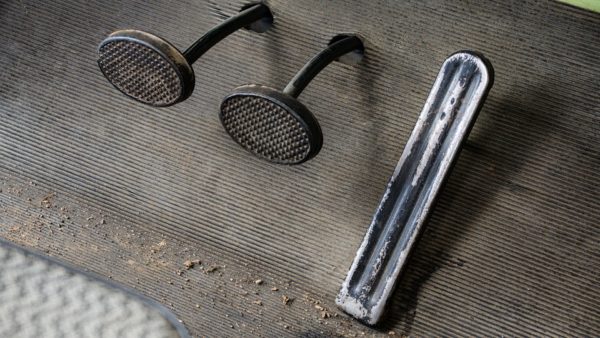
When you press the brake pedal to the floor, at least one inch of space must remain between the pedal and the floorboard. A soft, spongy pedal or one that sinks to the floor suggests a brake system issue. The test won't start until it's fixed.
Horn

The horn must be audible from 200 feet away. The examiner will ask you to sound it. Press it once, confirm it works, move on. If your horn has been broken for months and you've been meaning to fix it, now is the time.
Emergency/parking brake
You must show the examiner how to set and release the parking brake. Whether your car uses a hand lever, a foot pedal, or an electronic button, know where it is and how to operate it without looking. This takes two seconds if you've practiced it at home.
Arm signals
You must correctly demonstrate three arm signals out the driver's window: left turn (arm straight out horizontally), right turn (arm bent up at the elbow), and slow or stop (arm bent down at the elbow). These aren't used much in modern driving, but the DMV still tests them as part of the pre-drive check.
Windshield wipers
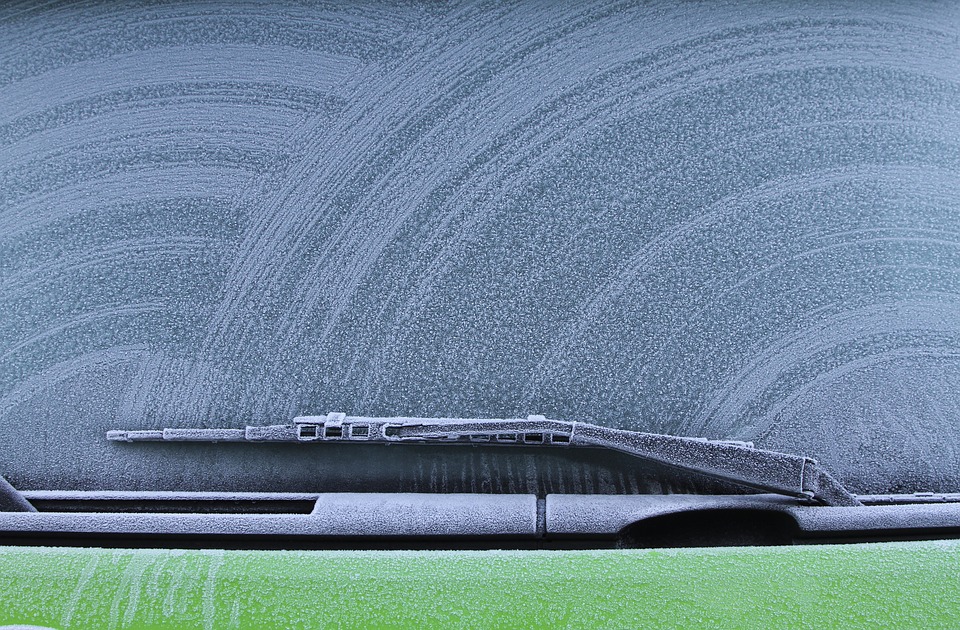
You must locate and activate the windshield wiper switch. The examiner isn't checking whether your wipers are new, just that they work and that you know where the control is. If you're borrowing someone else's car, find the wiper stalk before you arrive at the DMV.
Defroster
You must locate and turn on the front windshield defroster. On newer vehicles with touchscreen controls, this might be buried in a menu. Know exactly where it is in the car you bring.
Emergency flashers
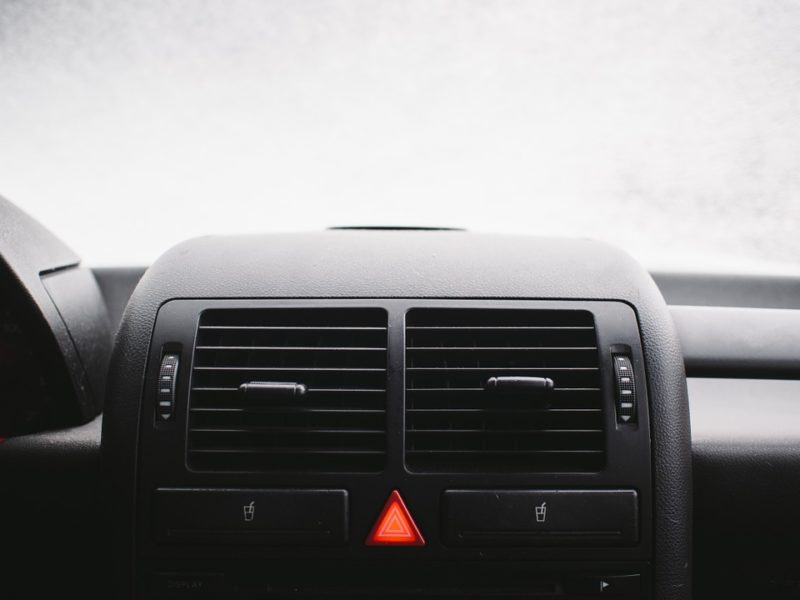
You must locate and activate the hazard lights. In most cars it's the red triangle button in the center of the dash. In others it's on the steering column. This is one of the items people fumble most when using a borrowed car. Find it the night before.
Headlights
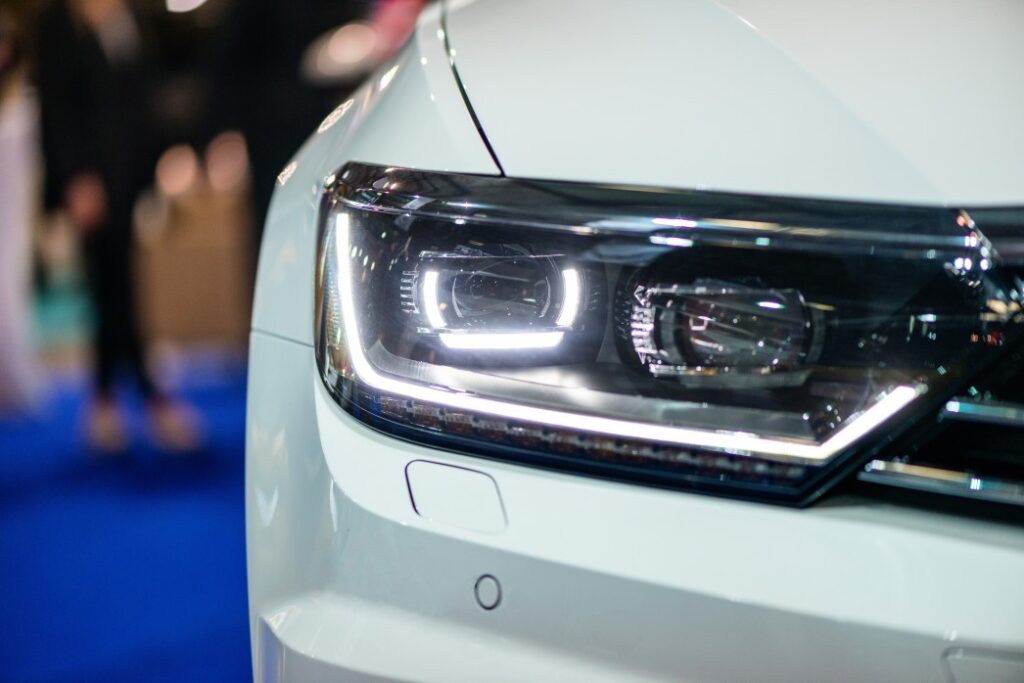
You must locate and turn on the headlights when asked. Know how to switch between low and high beam. Confirm that both headlights are working before you leave home.
Passenger door
The front passenger door must open and close properly from the outside. The examiner opens it themselves at the start of the check. A door that won't latch or has a broken handle cancels the test.
Glove box
You must close the glove box securely. An open or broken latch is treated as a distraction risk. Make sure yours latches before you show up.
Seat belts
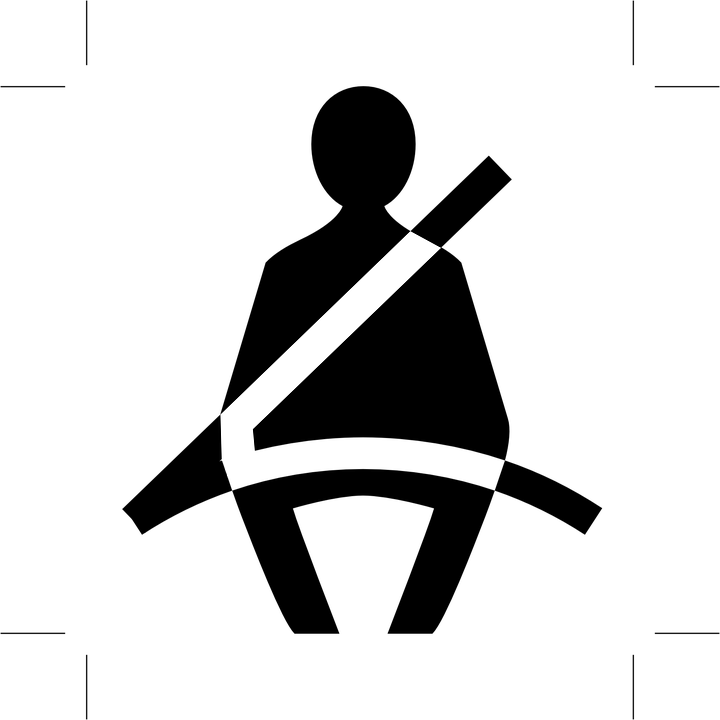
Both the driver's and front passenger's seat belts must be present and work properly. The examiner buckles in before the drive begins, so a broken passenger seat belt cancels the test. Check both seats before driving to your appointment.
How the scoring works during the drive
Once the pre-drive check is done, the examiner directs you out of the parking lot and the scored portion begins. You start with 100 points. Each error costs one point. Accumulate 15 errors and you fail. Accumulate more than three errors of the same type and you fail on that category alone, regardless of your total.
Some errors end the test immediately. These are critical driving errors:
- Running a red light or stop sign
- Striking another vehicle, a curb, or any object
- A dangerous or reckless maneuver that forces the examiner to physically intervene
- Driving into oncoming traffic
- Disobeying the examiner's directions
If the examiner grabs the wheel or hits the dash-mounted brake, the test is over. That's a safety event, not a grading one, and it counts as a fail regardless of your score up to that point.
What gets marked during the drive
The drive typically covers left and right turns, lane changes, stopping at signs and signals, yielding to pedestrians, backing up in a straight line, and parking. The route varies by DMV office but the scoring criteria are the same everywhere.
The errors that appear on fail score sheets most often:
- Rolling stops. The car must come to a complete stop at every stop sign. A slow-down-and-roll is a rolling stop and costs a point each time. Make three and you fail on that category.
- No blind-spot check before lane changes. You must check the mirror and then physically turn your head. The examiner watches for the head movement. Checking only the mirror gets marked.
- Driving too slowly. Going well under the posted limit is a traffic hazard on the score sheet. Drive with traffic.
- Stopping past the limit line. Stop behind the white stripe at intersections, not past it.
- Improper turns. Right turns must start and end in the rightmost lane. Left turns must end in the leftmost lane. Drifting wide costs a point.
How to prepare before your test
Go through the pre-drive checklist at least two days before your appointment. Check every light, test the horn, confirm both seat belts work. Don't leave it for the morning of.
Know the controls in whatever car you bring. If you're borrowing a family member's car, sit in it the day before and find the hazard lights, defroster, and wiper switch. Fumbling during the pre-drive check wastes time and makes a bad first impression.
For the written rules that underpin the scored driving maneuvers, our free California DMV practice tests cover right-of-way, speed limits, signs, and intersection rules. If you're shaky on any of those, work through a practice test before your appointment.
For the full breakdown of what happens during the scored drive and the most common fail reasons, see our California behind-the-wheel test guide.
What to bring on test day
Showing up with the wrong documents is one of the most avoidable ways to have your appointment cancelled. Bring all of the following:
- Your valid California learner's permit (or out-of-state license if converting)
- Your vehicle's current registration card
- Proof of insurance for the vehicle you're driving (not your parent's insurance card: it must show the vehicle you're bringing)
- A licensed driver who is 18 or older to drive the car home if you don't pass
The examiner will check all of these before the pre-drive inspection starts. Missing any one of them means the appointment ends before it begins.
- Running a red light or STOP sign: the examiner marks an automatic fail and the test ends on the spot
- Forcing the examiner to use the hand brake or steer to avoid a collision
- Striking a curb, pedestrian, cyclist, or any object at any speed
- Refusing to follow a lawful instruction from the examiner
- Driving more than 10 mph over the posted speed limit in the test zone
If you fail the behind-the-wheel test
Failing doesn't mean starting over from scratch. Your original application fee covers up to three behind-the-wheel attempts. If you fail on the first try, you can reschedule at no additional cost. Some DMV offices allow same-day retesting if a slot opens up, but availability varies.
If you fail all three attempts, you must submit a new application and pay the $38 fee again before you can schedule another behind-the-wheel test.
After a fail, ask the examiner to review your score sheet with you. They're required to do this. The score sheet shows exactly which errors cost you points, which gives you a concrete list of what to work on before the next attempt. Don't leave the DMV without reviewing it.
Choosing your DMV location strategically
All DMV offices administer the same test with the same scoring criteria, but the routes vary. Offices in dense urban areas often include heavier traffic, more complex intersections, and parallel parking on busy streets. Offices in smaller cities or suburban areas typically run shorter routes through quieter residential streets.
If you have a choice of location, look at the neighborhoods around different offices on a map before booking. Some people drive the area around their chosen office a few times before the test date to get comfortable with the types of turns and intersections they're likely to encounter.
You are not required to test at the DMV office nearest your address. You can book at any office in California.
What to do and avoid on test day
- Drive the route around the test center before your appointment: many examiners use the same roads
- Check your mirrors, signals, and lights the night before, not in the parking lot
- Come to a complete, full stop at every STOP sign: the wheels must stop moving
- Signal every lane change and turn at least 100 feet in advance
- Check your blind spots with a visible head turn, not just mirrors
- Keep both hands on the wheel during the entire test
- Bring a vehicle with a cracked windshield, broken signal, or bald tires: the test will be cancelled before it starts
- Adjust your mirrors or seat after the pre-drive check starts
- Inch forward at a STOP sign and count it as a stop: it isn't
- Look at the examiner's clipboard while driving; it's a distraction and shows nerves
- Second-guess lane position: stay right unless told otherwise
- Forget to check oncoming traffic before turning left, even on a green light
Watch: California DMV Practice Test 2026
46 real questions with answers and explanations — follow along or use it to study on the go.